
Why Is the Top Floor of My Townhome So Hot? Fixes for Three-Level Homes

The Physics of Townhome Overheating: Thermal Stratification & Stack Effect
Three major physical forces cause top-floor townhome overheating. First is the 'stack effect': warm air is naturally less dense than cold air, causing heat from all three levels to migrate upward through the open stairwell. Second is intense solar attic radiation: dark asphalt roof shingles absorb solar heat, driving attic temperatures up to 130°F to 140°F, which radiates directly through third-floor ceiling drywall. Third is thermostat misplacement: standard townhome designs place a single thermostat on the middle dining or living level. The thermostat satisfies once the middle floor hits 72°F and shuts the air conditioner down, leaving the top-floor master suite baking at 78°F to 82°F.

Why Manual Damper Adjustments Rarely Solve the Problem
Many homeowners attempt to force more conditioned air upstairs by partially closing supply register dampers on the first and second levels. While this slightly increases air velocity through upstairs registers, it drastically increases total external static pressure on the blower motor. Operating against excessive static pressure (above 0.8 in. w.g.) reduces overall system airflow below the critical 350 CFM per ton threshold, which can trigger frozen evaporator coils or cause premature ECM motor failure. Furthermore, vertical supply duct runs routed through interior 2x4 partition walls are simply too narrow to overcome 30 feet of vertical friction loss.
The Ultimate Fix: Dedicated Single-Zone Ductless Mini-Splits
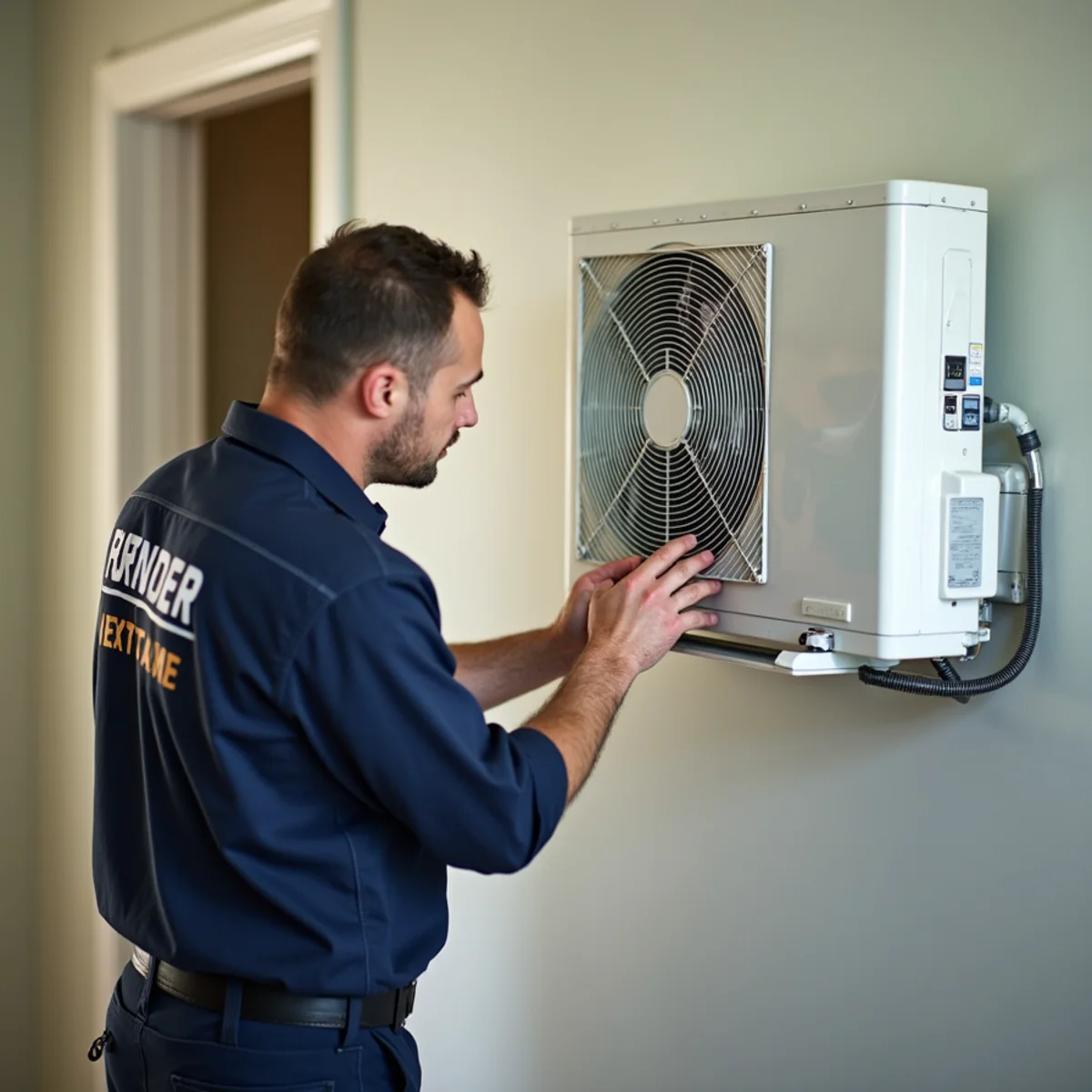
The most permanent and cost-effective engineering solution is installing a high-efficiency single-zone ductless mini-split heat pump dedicated solely to the third-floor master suite. A whisper-quiet indoor air handler mounts discreetly high on the bedroom wall, powered by a compact outdoor inverter condenser installed on the ground-level patio or deck. You can dial your bedroom temperature down to a crisp 67°F for deep sleep without over-cooling the lower floors or overworking your central system. In addition, inverter compressors modulate output down to 25% capacity for exceptional electrical efficiency.

Duct Sealing & Attic Insulation Defense
In addition to supplemental cooling, addressing attic duct leakage provides immediate relief. Many townhomes built between 1995 and 2010 have flexible duct runs in unconditioned attic kneewalls that suffer from disconnected collar joints and degraded fiberglass insulation. Sealing duct connections with UL-181 mastic paste or computer-controlled Aeroseal aerosol sealant prevents 130°F attic air from being pulled into the return ductwork, reducing supply air temperatures at the register by 3°F to 5°F.
Frequently Asked Questions on This Topic
Quick practical answers for Northern Virginia homeowners.
Our local Gainesville HVAC dispatch team is ready to assist you.
Recommended Next Steps & Related Services
Need Fast Heating or Cooling Help in Gainesville?
Connect with our 24/7 dispatch coordinators to schedule diagnostic service with a licensed Virginia technician.
Not urgent? Send a request
For non-emergency quotes, planned replacements, and inquiries. For the fastest help, call (321) 478-0693.