
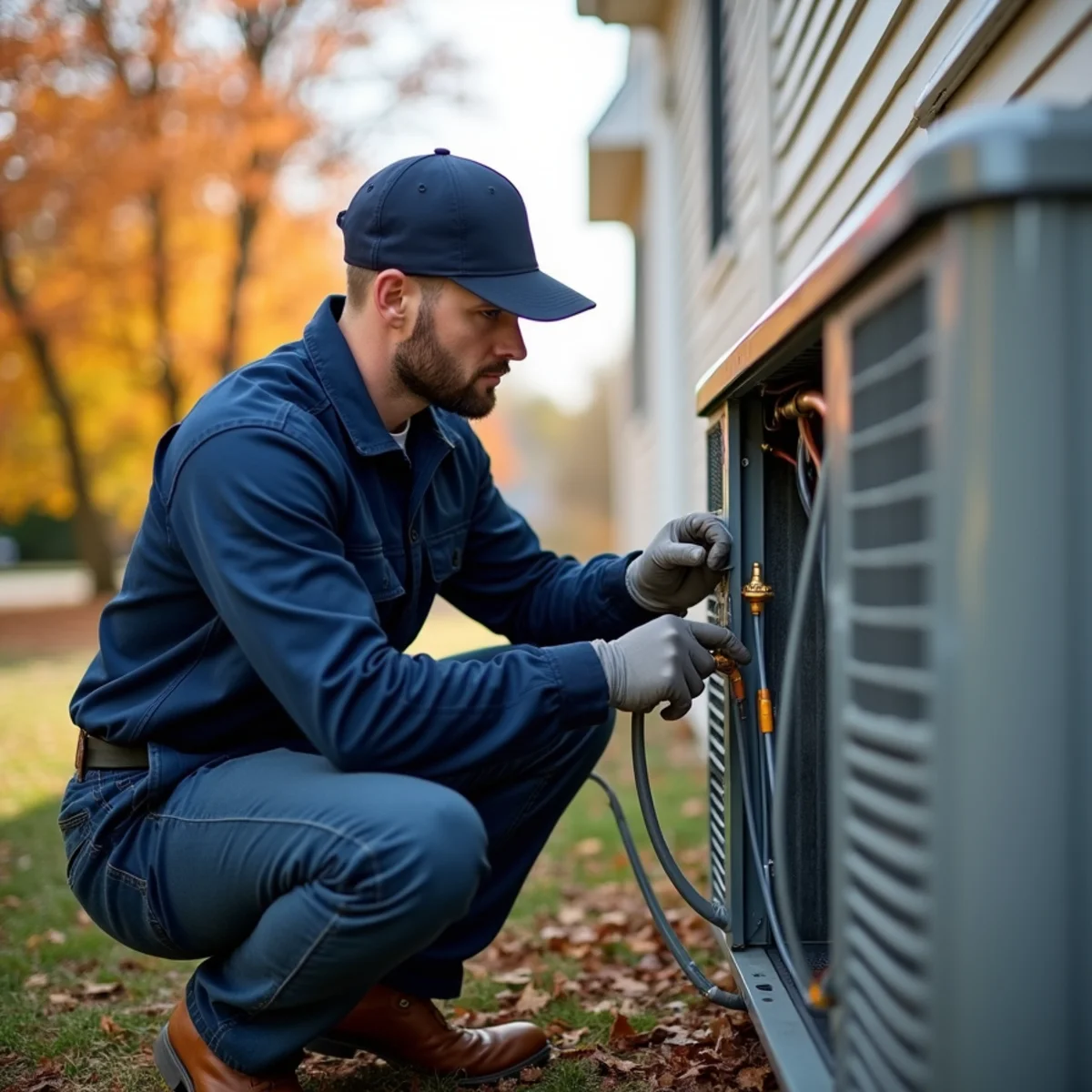
Heat Pump Repair in Gainesville, VA
Heat pump repair in Gainesville, VA addresses the complex thermodynamic demands of dual-season systems that heat and cool your home year-round. Heat pumps are the dominant heating solution across western Prince William and Fauquier counties—especially in subdivisions beyond municipal natural gas pipelines like Lake Manassas, Virginia Run, Piedmont, and rural Haymarket or Broad Run. Operating continuously through humid 95°F mid-Atlantic summers and sub-freezing winter cold snaps, heat pumps endure double the mechanical runtime of dedicated air conditioners. When freezing rain encases the outdoor coil, a 4-way reversing valve sticks, or auxiliary heat strips stay energized during mild weather, prompt technical intervention is essential. J&S Air Experts connects Northern Virginia homeowners with licensed, EPA Section 608-certified technicians equipped with specialized diagnostic instruments to troubleshoot reversing valves, defrost logic boards, thermostatic expansion valves (TXVs), and variable-capacity inverter compressors quickly and accurately.
Common Heat Pump Symptoms Requiring Service
If you observe any of the following symptoms in your Gainesville home, your heating or cooling system requires prompt professional diagnostic inspection before minor wear turns into catastrophic failure:
- Outdoor heat pump condenser encased in a thick, solid block of ice that fails to clear during automatic defrost cycles
- Thermostat display continuously illuminated with 'AUX HEAT' or 'EMER HEAT' during mild 40°F–50°F weather conditions
- Supply registers blowing lukewarm or chilly air (sub-75°F) while the system is set to heating mode on cold winter mornings
- Loud metal clattering, high-pitched hissing, or grinding sounds originating from the reversing valve solenoid or scroll compressor
- Outdoor condenser fan motor spinning erratically or completely stalled while the internal compressor hums loudly under high head pressure
- Unexplained doubling or tripling of monthly Dominion Energy or NOVEC electric utility bills during early winter billing cycles
- Heat pump mechanically stuck in cooling mode during mid-winter or stuck in heating mode during mid-summer humid heat waves
- Rapid short-cycling where the heat pump runs for only two to three minutes before tripping internal high-pressure limit switches
Heat Pump Normal Operation vs. True Malfunction: The 90°F–100°F Air Dynamic
One of the most frequent service calls we receive from Gainesville homeowners transitioning from a traditional natural gas furnace to an electric heat pump concerns supply air temperature. A conventional gas furnace discharges intense, dry air between 120°F and 135°F. In contrast, an air-source heat pump delivers steady, sustained warmth typically between 90°F and 102°F. Because this supply air is slightly cooler than normal human body temperature (98.6°F), air exiting supply registers can feel drafty or lukewarm when moving rapidly, even though it is actively warming the room to your 70°F thermostat setpoint. However, there is a distinct boundary between normal thermodynamic operation and a legitimate mechanical failure. If your home fails to reach the set temperature over several hours, if supply register temperatures drop below 80°F during mild 40°F weather, or if the outdoor unit runs constantly while indoor temperatures actively fall, the system is experiencing a component malfunction. This could stem from a defective thermal expansion valve, low refrigerant charge due to copper pinhole leaks, or a failed reversing valve that fails to divert hot discharge gas into the indoor evaporator coil.
Iced-Over Outdoor Condenser: Defrost Boards, Sensors, and Low Refrigerant
During winter in Prince William County, outdoor temperatures hover between 28°F and 38°F with high relative humidity and frequent freezing drizzle. Under these atmospheric conditions, moisture in the ambient air naturally condenses and freezes onto the sub-freezing outdoor evaporator coil fins. A thin layer of frost is entirely normal. High-efficiency heat pumps are engineered with automated defrost systems—either time-temperature controls (running every 30, 60, or 90 minutes) or intelligent demand-defrost microprocessors that monitor temperature differential sensors. During a normal defrost cycle, the reversing valve temporarily shifts the unit back into cooling mode to direct scorching discharge gas through the outdoor coil, rapidly melting frost in 3 to 10 minutes while indoor electric heat strips energize to keep your home warm. However, if you step outside and find the outdoor unit encased in an impenetrable casing of solid white ice from top to bottom, your defrost cycle has failed. Common causes include a failed bimetal defrost thermostat, a broken outdoor temperature thermistor, an open defrost relay on the control board, a seized outdoor condenser fan motor, or severe refrigerant undercharge. Continuing to run an iced-over unit risks catastrophic compressor liquid slugging and motor burnout.
Auxiliary & Emergency Heat: Understanding the Thermal Balance Point & Electric Bill Spikes
Every air-source heat pump installed in Northern Virginia has an engineering metric known as the 'thermal balance point'—the precise outdoor temperature (typically between 30°F and 35°F for single-stage systems) where the heat loss of the building structure exactly matches the heating capacity of the heat pump. Below this ambient threshold, the heat pump can no longer satisfy the thermostat alone, prompting the indoor air handler to energize electric resistance auxiliary heat strips (typically 5 kW to 15 kW elements) to bridge the heating deficit. Auxiliary heat is designed as temporary, supplemental heat. However, when a mechanical failure disables the outdoor compressor—or when a failing thermostat improperly energizes the backup heat circuit—the auxiliary heat strips become your sole heat source. Electric resistance heating converts electricity directly into heat at a 1:1 COP (Coefficient of Performance), whereas a modern heat pump operates at a COP of 2.5 to 3.5. Running continuously on backup heat strips will cause your Dominion Energy or NOVEC electric bill to jump by $300 to $600 in a single billing cycle. Our technicians verify staged heating controls and test sequencer contacts to ensure your expensive backup heat strips only run when genuinely required.
Four-Way Reversing Valve Diagnostics & Solenoid Coil Troubleshooting
The 4-way reversing valve is the mechanical heart of any heat pump system, responsible for altering the directional flow of high-pressure refrigerant between winter heating and summer cooling modes. The valve consists of an external 24-volt electrical solenoid coil and an internal brass slider body driven by differential refrigerant pressure. When the reversing valve fails, the system becomes physically trapped in one mode, blowing cold air in winter or hot air in summer. Diagnosing a reversing valve requires strict technical procedure. Our technicians first check low-voltage wiring at the thermostat 'O' or 'B' terminal to confirm the solenoid coil is receiving 24 volts AC. If the coil generates a proper magnetic field, we attach precision digital pipe-clamp thermistors to all four copper lines entering and leaving the valve body. If the temperature differential between the true suction line and the suction inlet line exceeds 3°F to 5°F, hot discharge gas is leaking past the internal Teflon slider seat. Replacing a damaged reversing valve requires recovering the full refrigerant charge into certified recovery cylinders, unbrazing the four copper connections under continuous nitrogen purge to prevent copper oxide scale, and vacuum dehydrating the system below 500 microns before recharging.
Variable-Capacity Inverter Heat Pumps vs. Traditional Single-Stage Systems
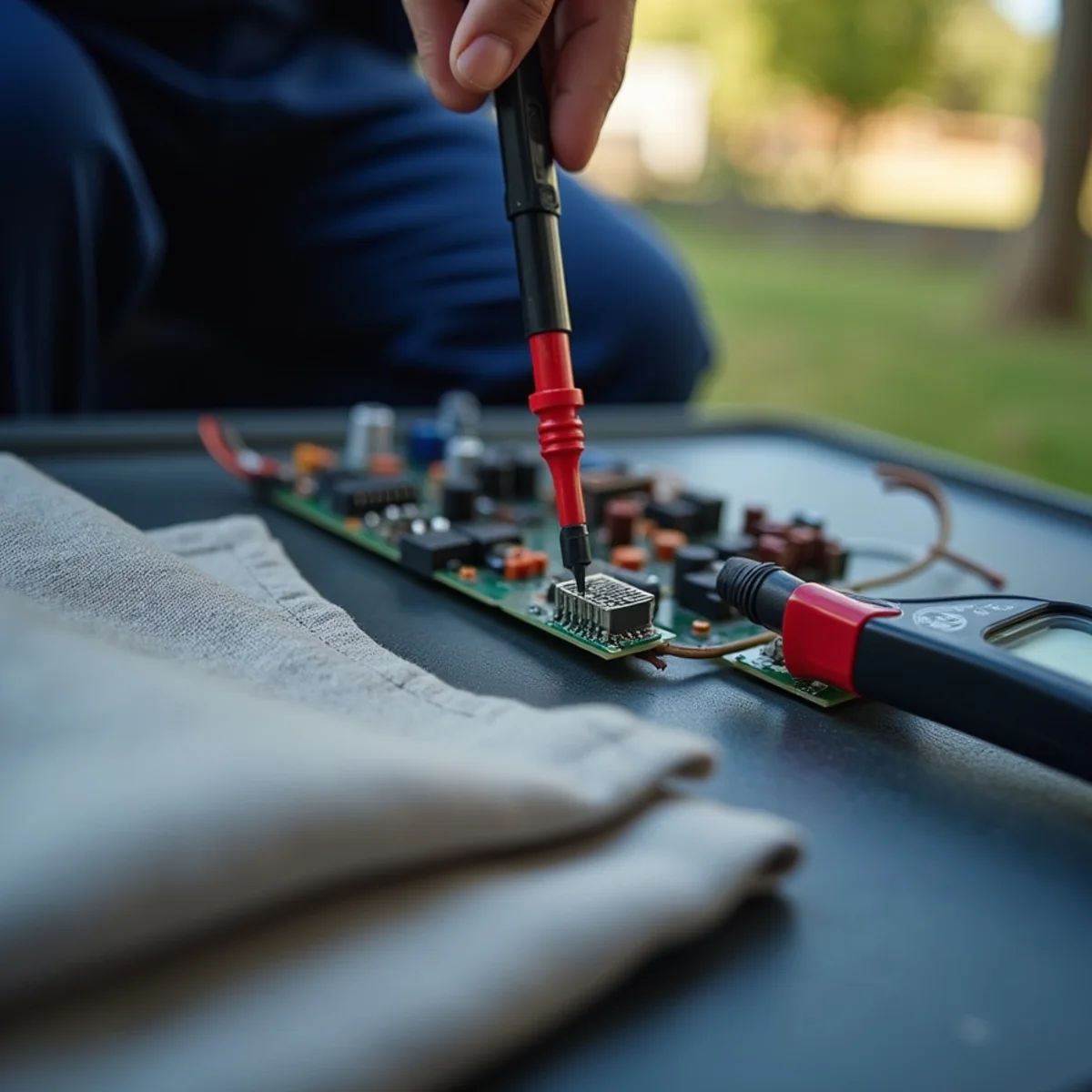
In premier Gainesville neighborhoods such as Wentworth Green, Virginia Run, and Braemar, many homeowners have upgraded to variable-capacity inverter heat pumps from premier manufacturers like Daikin, Carrier, Mitsubishi, and Trane. Unlike traditional single-stage systems that turn on at 100% capacity and shut off abruptly, inverter-driven systems utilize DC variable-frequency drives (VFDs) that modulate compressor motor speeds in 1% increments from 20% to 110% capacity. These advanced inverter systems maintain exceptionally high heating efficiency down to outdoor temperatures of 5°F or even -15°F without needing supplemental electric heat strips. However, diagnosing inverter heat pumps requires advanced electronic troubleshooting rather than standard mechanical checks. Our technicians use digital multimeters capable of measuring pulse-width modulation (PWM), DC bus voltage (often exceeding 300V to 380V DC), communication bus signals, and electronic expansion valve (EEV) step-motor resistance. Whether your system displays an inverter drive communication fault or an outdoor thermistor open circuit, we deliver surgical diagnostics that protect your high-efficiency investment.
Dual-Fuel Hybrid Heating: Pairing Heat Pumps with Gas Furnaces in Western Prince William
In transitional zones of Prince William and Fauquier counties where natural gas or propane tanks are available, hybrid dual-fuel systems represent the gold standard of heating performance and operating economy. A dual-fuel installation combines an electric high-efficiency heat pump with a condensing natural gas or LP propane furnace acting as the air handler and backup heat source. During mild autumn and winter days (38°F and above), the heat pump extracts heat from the outside air at high efficiency and lower cost. When temperatures plunge below the economic balance point (typically calibrated between 32°F and 35°F), the outdoor heat pump shuts down and the gas furnace activates, delivering robust 125°F heat that effortlessly conquers harsh winter freezes. Dual-fuel troubleshooting demands specialized knowledge of fossil fuel interface kits, outdoor ambient temperature sensors, and two-stage furnace ignition controls. J&S Air Experts ensures both stages of your hybrid heating system communicate seamlessly for maximum winter comfort and minimum operating expense.
Comprehensive Heat Pump Diagnostic Protocol
Thermodynamic Testing & Dual-Mode Pressures
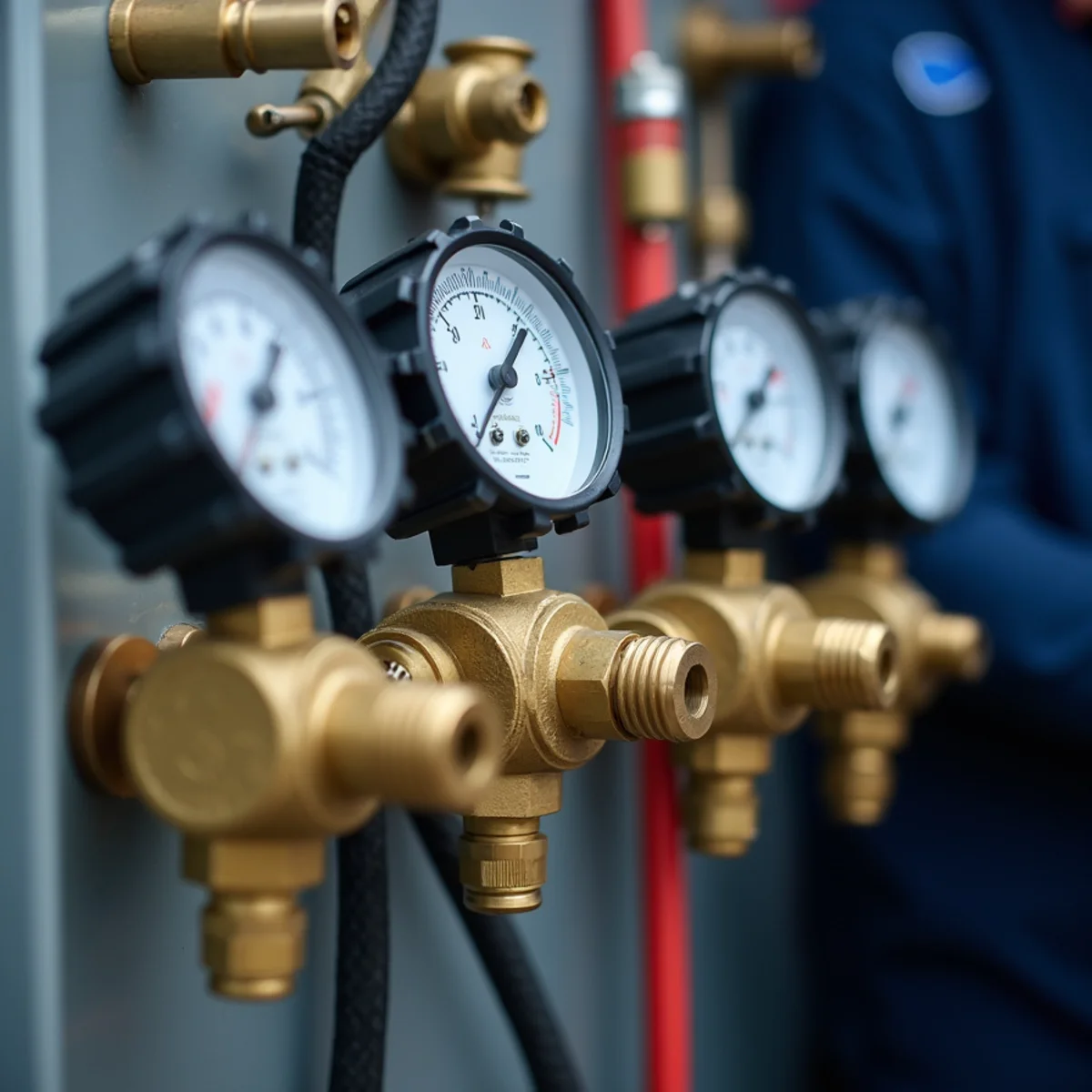
Technicians attach digital manifold gauges to assess suction and discharge pressures across both heating and cooling modes. We measure superheat and subcooling against outdoor ambient temperature and indoor wet-bulb conditions to identify micro-restrictions in the thermostatic expansion valve (TXV) or pinpoint refrigerant loss.
Defrost Control Logic & Sensor Audit
We manually force the electronic defrost control board into test mode. This verifies that the 4-way reversing valve shifts promptly, the outdoor condenser fan motor shuts off to trap heat inside the coil, and indoor auxiliary electric strip heat energizes to prevent cold air drafts inside the living spaces.
Reversing Valve Solenoid & Pressure Verification
Using magnetic test probes and infrared temperature diagnostics across all four copper tubes of the reversing valve, technicians determine whether a failure is caused by a low-voltage 24V solenoid electrical fault or an internal mechanical slide valve bleed-through bypass.
Electric Heat Sequencer & Strip Amperage Analysis
We clamp true-RMS ammeters across individual electric resistance heat strip circuits within the indoor air handler, inspecting staging sequencers, ceramic insulators, fusible links, and high-limit switches to prevent runaway power draw and eliminate fire risks.
Itemized Pricing & OEM Component Replacement
You receive an exact, written repair quote detailing parts and labor before any work commences. Approved repairs are executed using factory-authorized OEM components, followed by nitrogen pressure leak testing, deep vacuum evacuation to 500 microns, and precision digital charge trimming.
Key Cost Factors in Heat Pump Repairs
We believe in 100% upfront pricing transparency. Rather than quoting unrealistic fixed ballparks over the phone, here are the real-world factors that determine the scope of repair or replacement:
Why Gainesville Homeowners Choose J&S Air Experts for Heat Pump Repair
When you schedule heat pump repair with J&S Air Experts, you receive experienced craftsmanship backed by rigorous Virginia trade standards and complete pricing transparency:
Every HVAC technician we send is licensed and insured in Virginia. Technicians comply with all Virginia Uniform Statewide Building Codes and Prince William County standards.
Following a thorough physical diagnostic evaluation, you receive an itemized, flat-rate quote before any technician turns a wrench.
No offshore voicemail centers. Call (321) 478-0693 at any hour to speak with a coordinator ready to dispatch emergency help.
Backed by over 127 verified homeowner reviews across western Prince William County and Northern Virginia.
Heat Pump Repair Coverage Across Gainesville & Surrounding Towns
From our dispatch hub in Gainesville (ZIP 20155), our mobile HVAC service fleet provides rapid, reliable response times throughout the Interstate 66, Route 29, and Route 15 corridors. We routinely deliver prompt heat pump repair for residential single-family homes, townhomes, and rural acreage properties in Haymarket (Dominion Valley & Piedmont), Bristow (Braemar & Victory Lakes), Manassas, Centreville, Warrenton & Fauquier County, Herndon, and Vienna.
Heat Pump Repair Frequently Asked Questions
Clear answers regarding heat pump repair in Gainesville and surrounding Prince William County communities.
Our local Gainesville HVAC dispatch team is ready to assist you.
Related Heating & Cooling Resources
Ready for Dependable Heat Pump Repair in Gainesville, VA?
Call our live 24/7 dispatch line or submit the form below for fast, professional heating and cooling solutions.
Not urgent? Send a request
For non-emergency quotes, planned replacements, and inquiries. For the fastest help, call (321) 478-0693.
Live 24/7 Dispatch
Connect with our Gainesville dispatch center. Honest quotes before any repair commences.
(321) 478-0693Service Areas for Heat Pump Repair
Our technicians provide rapid response to all neighboring towns within a 25-minute drive:
Every HVAC technician we send is licensed and insured in Virginia. J&S Air Experts connects you with independent licensed HVAC contractors who perform the work.