
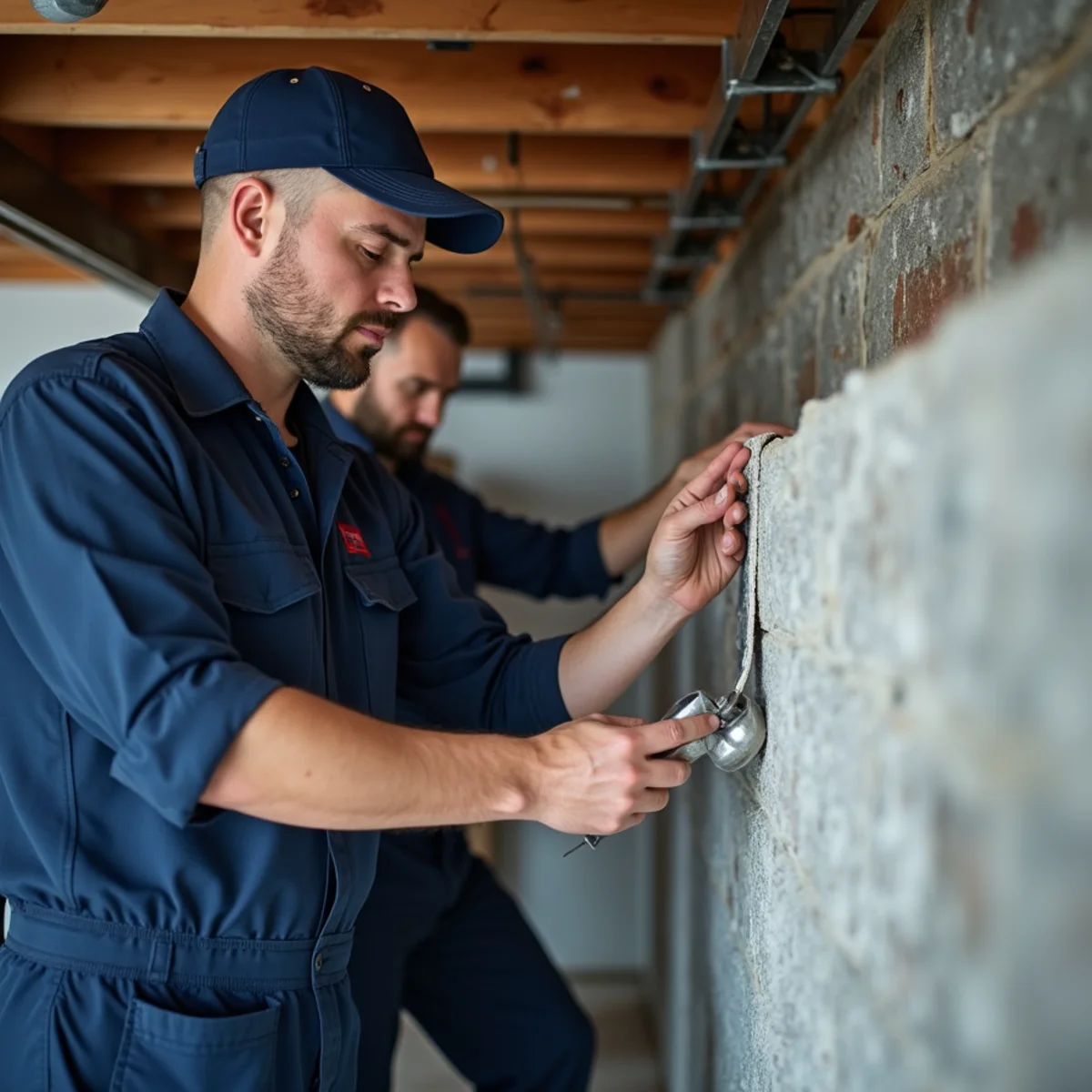
Ductwork Repair and Airflow Balancing in Gainesville, VA
Ductwork repair and airflow optimization in Gainesville, VA directly addresses the hidden distribution flaws that rob heating and cooling systems of up to 30% of their intended capacity. Your furnace, heat pump, or air conditioner is only as effective as the concealed duct network delivering conditioned air to every room. Across Prince William and Fauquier counties—particularly in multi-level colonials and three-story townhomes throughout Braemar, Virginia Oaks, and Wentworth Green—builder-grade duct systems frequently suffer from collapsed flexible duct runs, unsealed sheet metal plenums, disconnected return drops, and severe friction losses in long vertical chases. When conditioned air leaks into a blazing 130°F attic or chilly crawlspace, utility bills skyrocket while top-floor bedrooms remain sweltering in summer and freezing in winter. J&S Air Experts connects Northern Virginia homeowners with certified duct design specialists who utilize thermal imaging, digital manometers, UL-181 mastic sealing, and precision airflow balancing to restore whole-home comfort.
Signs of Damaged or Unbalanced Ductwork
If you observe any of the following symptoms in your Gainesville home, your heating or cooling system requires prompt professional diagnostic inspection before minor wear turns into catastrophic failure:
- Distant bedrooms or third-floor living areas consistently measuring 6°F to 10°F hotter in summer and colder in winter than the main floor
- Loud whistling, roaring, or sheet metal booming (oil-canning) noises whenever the HVAC blower motor cycles on or off
- Visible clouds of dust or musty fiberglass odors billowing from supply registers during the initial seconds of blower startup
- Unexplained surges in monthly heating and cooling utility bills despite recent equipment tune-ups and clean filters
- Visible tears, deteriorated gray fabric duct tape, or severely kinked and sagging flexible duct runs across attic floor joists
- Rooms with closed interior doors developing strong positive or negative air pressure, causing doors to slam shut or whistle
- Condensation or sweating on exterior metal duct jackets in unconditioned attics, leading to insulation waterlogging and mold
- Rooms located closest to the mechanical room receiving roaring airflow while distant master suites receive barely a gentle breeze
Solving Airflow Imbalance in Three-Level Townhomes: Friction Loss & Vertical Static Pressure Drops
In multi-level townhome communities throughout Gainesville and Bristow—such as Braemar, Crossroads, and Wentworth Green—homeowners face severe temperature stratification between floors. Second-floor living areas remain comfortable, while third-floor master suites are starved of cool air in July and warm air in January. This occurs because branch duct runs traveling from a basement furnace or second-floor utility closet must navigate long, vertical interior wall chases to reach the top level. Air flowing through ductwork encounters internal friction against duct walls. With every linear foot of ductwork and every 90-degree bend, static pressure drops precipitously. The lower floors, located closest to the blower, rob the majority of conditioned airflow. Sealing supply trunkline leakage and installing calibrated manual balancing dampers on lower-level branch lines forces air volume upward, restoring balanced CFM delivery to overheated top-floor bedrooms.
The Attic Duct Penalty: Thermal Conduction Loss in 130°F Attics
In Northern Virginia, thousands of homes feature HVAC duct systems routed through unconditioned attics. On a sunny 92°F July afternoon, solar radiation baking asphalt shingles drives attic temperatures to a sweltering 120°F to 135°F. Conditioned air leaving your air handler at a crisp 55°F must travel through this blistering oven before reaching bedroom ceiling registers. If your attic ductwork is insulated with outdated R-4 or R-6 insulation—or worse, if flex duct outer vapor barriers have torn—thermal conduction warms the air inside the duct by 4°F to 7°F before it ever exits the register. A system producing 55°F air at the coil may deliver lukewarm 62°F air into upstairs bedrooms. Furthermore, if supply ducts have minor seam leaks, the positive pressure forces cold air directly into the attic, while negative-pressure return leaks suck superheated, fiberglass-laden attic air directly into your cooling system. Repairing and insulating attic ducts with modern foil-faced R-8 insulation drastically cuts cooling loads and restores frosty register temperatures.
UL-181 Mastic vs. Deteriorating Gray Duct Tape: The True Standard of Duct Sealing
One of the great ironies of the HVAC industry is that standard gray cloth 'duct tape' should never, under any circumstances, be used on air ductwork. In fact, the Virginia Uniform Statewide Building Code explicitly bans standard duct tape for duct joint sealing. Standard gray duct tape uses rubber-based adhesives that rapidly dry out, crack, and fail when exposed to the high heat and humidity cycles of Northern Virginia attics and basements. Within two to three years, the tape peels away, leaving open gaps that vent conditioned air into wall cavities. Professional duct restoration relies exclusively on Underwriters Laboratories-approved UL-181 fiber-reinforced mastic paste. Mastic is a thick, flexible polymer paste applied over fiberglass reinforcing mesh. When cured, it forms a permanent, airtight, fire-rated seal that expands and contracts with sheet metal thermal cycles and lasts for the lifetime of the home.
Aeroseal Computerized Aerosol Sealing: Reaching Inaccessible Wall Chases
While accessible duct joints in attics, basements, and mechanical closets can be sealed manually with mastic paste, up to 60% of a home's ductwork is completely concealed behind finished drywall, inside subfloors, and within vertical wall chases. Tearing out finished ceilings and sheetrock to tape leaky ductwork is cost-prohibitive. Aeroseal computerized aerosol duct sealing provides a revolutionary non-invasive solution. Technicians temporarily block all supply registers and return grilles with foam plugs and pressurize the duct system with a computer-controlled diagnostic blower unit. A non-toxic, aerosolized vinyl polymer mist is injected into the ductwork. As air escapes through cracks and seams up to 5/8-inch wide, the suspended sealant particles collide and stick to the edges of the leaks, building a permanent seal from the inside out. Real-time computer software graphs the leakage reduction, typically reducing duct leakage by 80% to 95% without cutting a single piece of drywall.
Static Pressure, Blower Motor Burnout & The 'Stranglehold' of Undersized Return Air
When evaluating duct systems, contractors frequently discover that chronic HVAC breakdowns are caused by a severe airflow bottleneck: undersized return air ductwork. In many production homes built across Prince William County between 1995 and 2012, builders installed adequate supply registers but cut costs by installing undersized return grilles. An HVAC blower motor is an air pump that requires a matched volume of return air to push supply air forward. When return ducts are undersized, the system suffers from excessively high Total External Static Pressure (ESP), often exceeding 0.8 to 1.0 inches of water column (in. w.c.) against a manufacturer maximum limit of 0.5 in. w.c. High static pressure strangles the system, causing variable-speed ECM blower motors to over-amp and burn out, heat exchangers to trip high-temperature limits, and evaporator coils to freeze. Our duct specialists enlarge return drops and install aerodynamically curved turning vanes to eliminate high static pressure.
Crawlspace Ductwork: Moisture Defense, R-8 Insulation & Vapor Barrier Encapsulation
In older communities and rural estate homes in nearby Haymarket and Warrenton, heating and cooling ductwork is frequently routed through unconditioned vented crawlspaces. During humid Virginia summers, outdoor moisture enters crawlspace vents and contacts cold metal supply ducts, causing heavy condensation sweating. Continuous duct sweating saturates fiberglass insulation blankets, causing them to compress and lose their thermal R-value. Worse, wet insulation becomes a breeding ground for toxic black mold, which can infiltrate leaky return ducts and contaminate living room air. Our technicians repair compromised crawlspace ducts, re-wrap them in high-density closed-cell R-8 insulation with taped zero-perm vapor barriers, and provide crawlspace encapsulation recommendations to permanently eliminate subterranean moisture hazards.
Our Systematic Airflow Restoration Process
Total External Static Pressure (ESP) & Airflow Audit
Technicians measure static pressure across return and supply plenums using dual-port digital manometers, calculating total friction drop and measuring cubic feet per minute (CFM) at individual supply registers using calibrated flow hoods.
Infrared Thermal Imaging & Duct Leakage Inspection
We scan duct trunklines and branch takeoffs using high-resolution thermal imaging cameras under live system pressure, instantly pinpointing hidden conditioned air blowouts in unconditioned attics, floor cavities, and crawlspaces.
Damaged Flex Duct Replacement & Aerodynamic Strapping
Crushed, kinked, or undersized flexible duct runs are replaced with high-efficiency R-8 insulated ducting, suspended with wide tension strapping to eliminate sag, sharp 90-degree bends, and internal friction turbulence.
UL-181 Fiber-Reinforced Mastic Sealing
All sheet metal seams, collar takeoffs, supply boots, and return plenums are permanently armored using fiber-reinforced UL-181 mastic paste, curing into a flexible, airtight gasket that withstands continuous thermal expansion.
Manual Balancing Damper Calibration & Verification
We install heavy-duty quadrant volume dampers on branch takeoffs, tuning air volume distribution to achieve proportional CFM delivery across all rooms followed by digital temperature split verification.
Duct Repair Pricing Drivers & Investment Transparency
We believe in 100% upfront pricing transparency. Rather than quoting unrealistic fixed ballparks over the phone, here are the real-world factors that determine the scope of repair or replacement:
Why Gainesville Homeowners Choose J&S Air Experts for Ductwork Repair & Airflow Optimization
When you schedule ductwork repair & airflow optimization with J&S Air Experts, you receive experienced craftsmanship backed by rigorous Virginia trade standards and complete pricing transparency:
Every HVAC technician we send is licensed and insured in Virginia. Technicians comply with all Virginia Uniform Statewide Building Codes and Prince William County standards.
Following a thorough physical diagnostic evaluation, you receive an itemized, flat-rate quote before any technician turns a wrench.
No offshore voicemail centers. Call (321) 478-0693 at any hour to speak with a coordinator ready to dispatch emergency help.
Backed by over 127 verified homeowner reviews across western Prince William County and Northern Virginia.
Ductwork Repair & Airflow Optimization Coverage Across Gainesville & Surrounding Towns
From our dispatch hub in Gainesville (ZIP 20155), our mobile HVAC service fleet provides rapid, reliable response times throughout the Interstate 66, Route 29, and Route 15 corridors. We routinely deliver prompt ductwork repair & airflow optimization for residential single-family homes, townhomes, and rural acreage properties in Haymarket (Dominion Valley & Piedmont), Bristow (Braemar & Victory Lakes), Manassas, Centreville, Warrenton & Fauquier County, Herndon, and Vienna.
Ductwork Repair & Airflow Optimization Frequently Asked Questions
Clear answers regarding ductwork repair & airflow optimization in Gainesville and surrounding Prince William County communities.
Our local Gainesville HVAC dispatch team is ready to assist you.
Related Heating & Cooling Resources
Ready for Dependable Ductwork Repair & Airflow Optimization in Gainesville, VA?
Call our live 24/7 dispatch line or submit the form below for fast, professional heating and cooling solutions.
Not urgent? Send a request
For non-emergency quotes, planned replacements, and inquiries. For the fastest help, call (321) 478-0693.
Live 24/7 Dispatch
Connect with our Gainesville dispatch center. Honest quotes before any repair commences.
(321) 478-0693Service Areas for Ductwork Repair & Airflow Optimization
Our technicians provide rapid response to all neighboring towns within a 25-minute drive:
Every HVAC technician we send is licensed and insured in Virginia. J&S Air Experts connects you with independent licensed HVAC contractors who perform the work.